
The Guide to Free Workflow Automation & Perpetual License Tools
Over the past decade, the software landscape transitioned aggressively toward Software-as-a-Service (SaaS) subscription models. While cloud subscriptions offer low upfront entry costs, they frequently introduce “SaaS fatigue”—a compounding accumulation of monthly user fees, per-task execution charges, and unpredictable renewal price hikes. For IT administrators, small business owners, and operations managers, automation software subscriptions can quickly become major operational expenses.
Fortunately, a growing movement toward free workflow automation and perpetual software licensing offers a clear path back to cost control and software ownership. This guide explores $0 automation tools, analyzes the financial advantages of perpetual license models, and demonstrates how technical teams can deploy sustainable desktop automation without subscription lock-in in 2026.
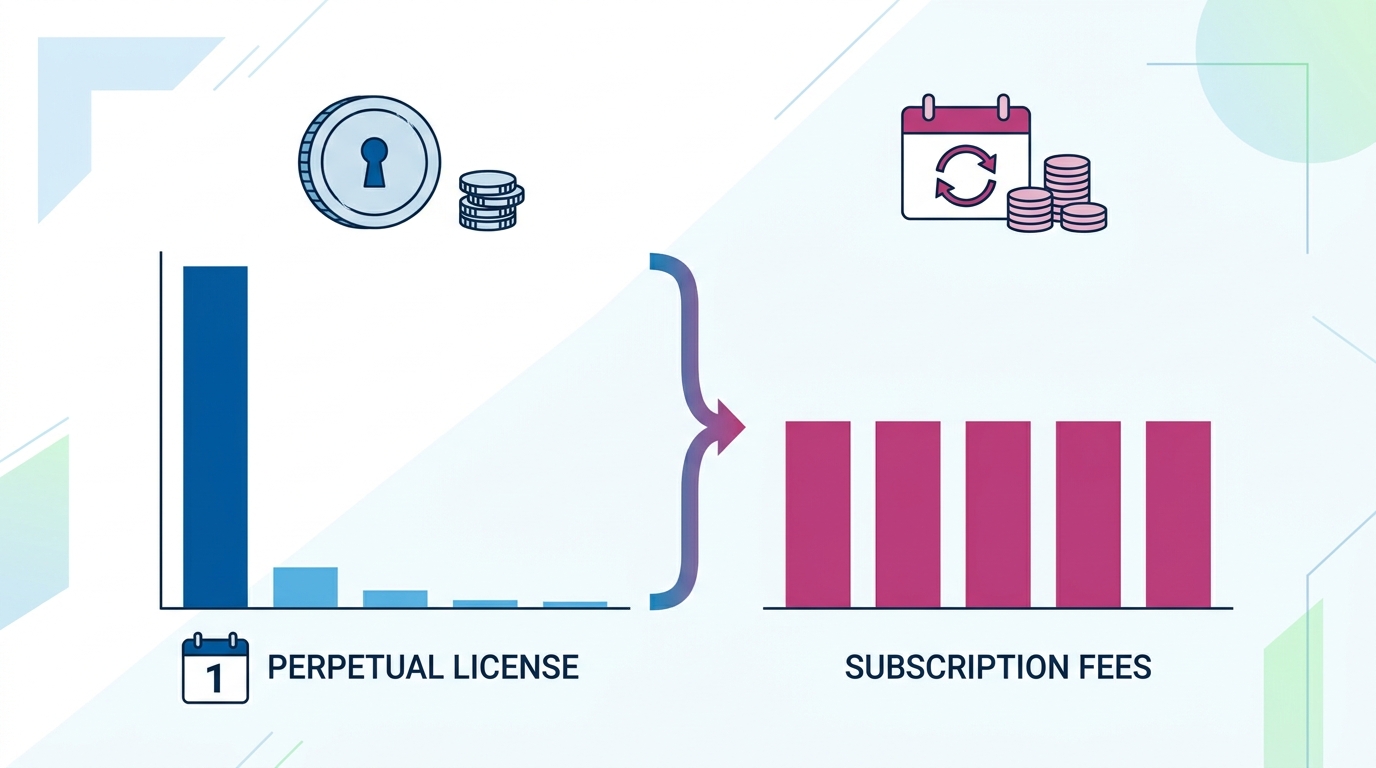
A visual comparison illustrating the long-term financial benefits of a perpetual license automation solution versus ongoing subscription costs.
The Hidden Costs of Cloud Automation Subscriptions
When organizations sign up for cloud-based Robotic Process Automation (RPA) platforms, the initial pricing tier often looks manageable. However, as automation adoption scales across departments, hidden cost drivers begin to emerge:
- Pay-Per-Task and Execution Tier Pricing: Many cloud workflow tools charge based on the total number of task operations or API calls. A single daily database sync that processes thousands of rows can consume monthly task quotas in a matter of days.
- User and Bot Runtime Licensing Fees: Scaling automation across multiple team members or running multiple concurrent background tasks usually requires purchasing additional bot licenses, significantly increasing annual software expenditure.
- Forced Upgrades for Enterprise Governance: Essential operational features—such as detailed logging, role-based access control, active directory integration, or local script triggers—are frequently locked behind top-tier enterprise plans.
- Data Egress and Cloud Hosting Surcharges: Moving high volumes of operational data between local infrastructure and cloud workflow runners incurs continuous cloud transit costs.
These compounding costs force teams to constantly audit workflow usage or suppress new automation projects to avoid hitting quota thresholds.
What is $0 Automation Software?
The term $0 automation software refers to automation tools that allow organizations to build, deploy, and run automated workflows without ongoing operational licensing fees. These solutions generally fall into three distinct architectural categories:
- Open-Source Libraries & Frameworks: Community-maintained platforms (such as Python scripts, AutoHotkey, or TagUI) that provide raw automation capabilities without software licensing fees.
- Freemium & Community Tiers: Enterprise software packages that offer free developer usage up to strict functional limits, user counts, or revenue ceilings.
- Locally Executed Standalone Utilities: Desktop utilities designed to run locally on host operating systems, eliminating cloud server hosting costs entirely.
By leveraging a local workflow tool for Windows, organizations eliminate cloud server overhead while gaining high execution speeds directly on local hardware.
Top Free RPA for IT Admins
IT administrators require reliable software capable of managing system administration, user management, file transformations, and software deployments. Evaluating free RPA for IT admins requires weighing software functionality against licensing limits.
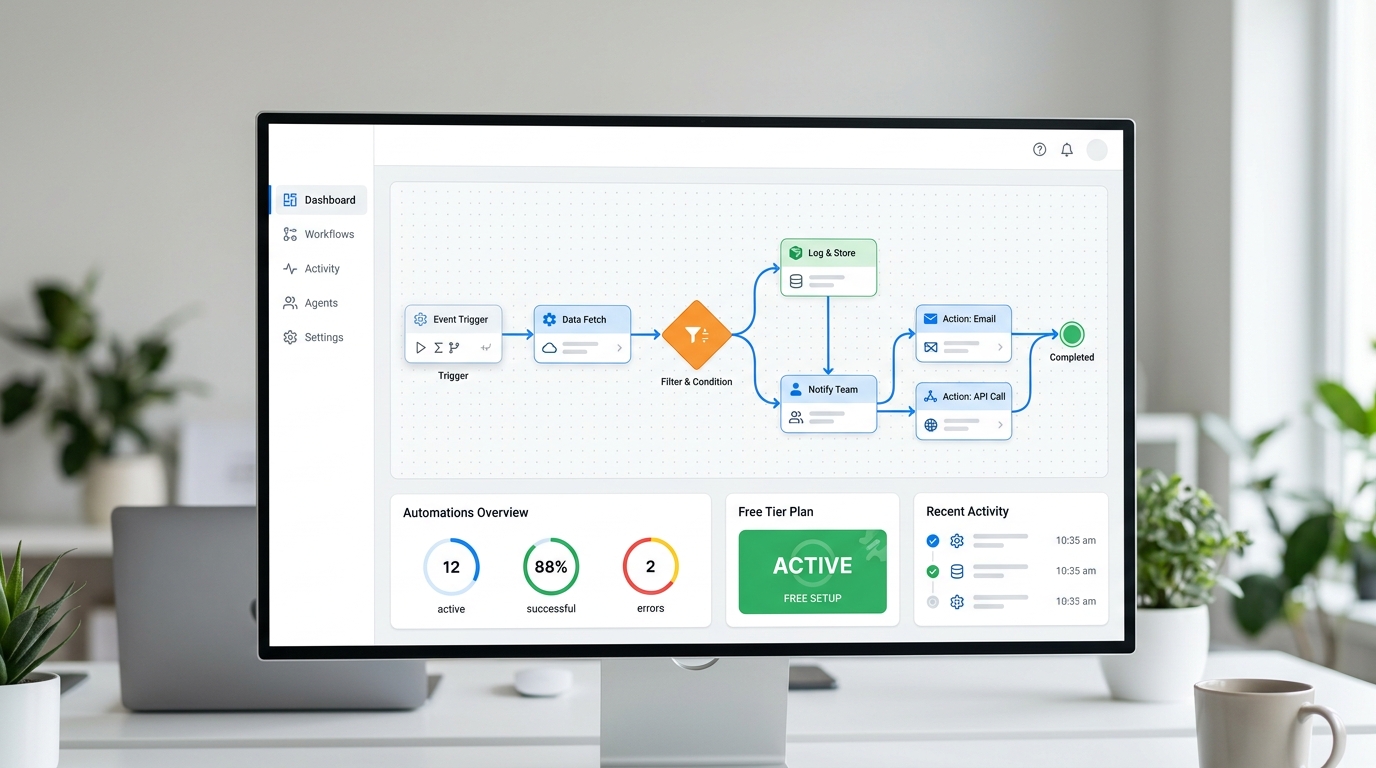
An illustrative IT admin dashboard demonstrating a free workflow automation setup, designed to reflect a clean, functional interface for managing automated tasks.
Exploring Free Tiers and Limitations
While free tiers from commercial RPA vendors provide helpful testing environments, IT managers must evaluate their operational trade-offs:
- Community Editions: Vendors often restrict free community tools to non-commercial use, force cloud connections, or limit unattended scheduling features.
- Cloud Platform Free Tiers: Cloud platforms usually impose monthly task quotas (e.g., 100 free tasks per month), making them unsuitable for continuous system monitoring or bulk data processing.
Windows Automation at No Cost
For pure Windows automation at no cost, technical teams can leverage several established strategies:
- Native Scripting (PowerShell & Batch): Windows includes powerful native scripting command-line shells capable of executing complex administrative tasks.
- Open-Source Script Orchestrators: Community frameworks allow developers to execute repetitive desktop actions programmatically without license checks.
- Visual Hybrid Tools (NORA): Modern desktop applications like NORA provide intuitive visual workflow builders that allow IT managers to connect visual drag-and-drop nodes directly to underlying PowerShell or Python code. By adopting a local script orchestrator, teams can manage their script libraries through a unified, zero-subscription dashboard.
No Subscription Automation: The Perpetual License Model
While completely free open-source tools offer zero software costs, they often require significant coding expertise and maintenance overhead. For teams seeking professional UI interfaces, enterprise stability, and visual workflow builders, no subscription automation delivered via a perpetual license represents the ideal financial and operational model.
Why Perpetual Licenses are Making a Comeback
A perpetual license model allows an organization to pay a single, transparent fee upfront to own the software version permanently. Key reasons why IT managers are returning to perpetual licensing include:
- Complete Budget Predictability: Software costs remain fixed, eliminating surprise annual SaaS renewal price increases.
- True Software Ownership: Your software continues to function indefinitely without risk of service termination if a subscription payment expires.
- Lower Total Cost of Ownership (TCO): Over a three-to-five-year operational window, perpetual software licenses typically cost a fraction of recurring cloud subscription fees.
Benefits of a Low Cost Automation Solution
Adopting a low cost automation solution built on local execution and perpetual licensing provides concrete operational advantages:
| Financial / Technical Metric | Cloud SaaS Subscription Model | Perpetual / Local Ownership Model (NORA) |
|---|---|---|
| Monthly Operating Expense | Recurring fee per user / per bot | $0 recurring licensing costs |
| Execution Scaling Costs | Increases with task volume | Unlimited local executions at $0 extra cost |
| Data Privacy & Compliance | Requires third-party cloud trust | 100% local, air-gapped data retention |
| Dependency Risks | Vulnerable to SaaS outages & price hikes | Complete operational independence |
FAQs
Are there any no subscription automation tools?
Yes. Platforms like NORA provide robust desktop workflow and script automation using a perpetual licensing model, eliminating recurring monthly subscription fees. Additionally, native scripting platforms like PowerShell offer open-source automation capabilities without subscription fees.
What is the best $0 automation software for Windows?
For developers comfortable with raw code, PowerShell combined with open-source frameworks like AutoHotkey offers powerful $0 automation. For IT teams and business managers seeking a visual interface without recurring SaaS fees, local workflow tools like NORA offer the ideal combination of usability and cost predictability.
Can you get a perpetual license for automation software?
Yes. While many enterprise RPA vendors have transitioned exclusively to cloud subscription pricing, select local-first solutions like NORA offer perpetual licenses, allowing organizations to own their software outright and run unlimited local tasks without recurring fees.
How to Achieve Predictable Automation Pricing
Achieving predictable software expenditure requires auditing your organization’s automation footprint. By moving away from per-task cloud pricing and adopting local, perpetual license software, business leaders protect their budgets while giving technical teams total operational freedom.
Evaluate your current automation stack today. Transitioning to local, no-subscription workflow tools allows your business to build secure, scalable, and air-gapped desktop automations with zero recurring subscription stress. Get started with NORA and discover modern workflow automation built on financial clarity and data ownership.