
The Case for Perpetual License Automation Software
Over the past decade, the software industry underwent a massive shift from traditional software ownership toward recurring Software-as-a-Service (SaaS) subscription models. While SaaS pricing offered low initial entry costs, IT departments in 2026 are experiencing severe “subscription fatigue.”
Operational budgets are increasingly consumed by recurring monthly or annual invoices for core IT utilities. For utility applications like workflow orchestrators, task schedulers, and script runners, paying endless subscription fees creates long-term financial drain without delivering proportional long-term value.
To regain control over operational budgets, forward-thinking IT leaders are returning to perpetual license automation software. By purchasing tools outright, organizations secure long-term software access, eliminate unpredictable price hikes, and reduce recurring operating expenses.
This article examines why perpetual licensing makes sound financial sense for modern IT operations.
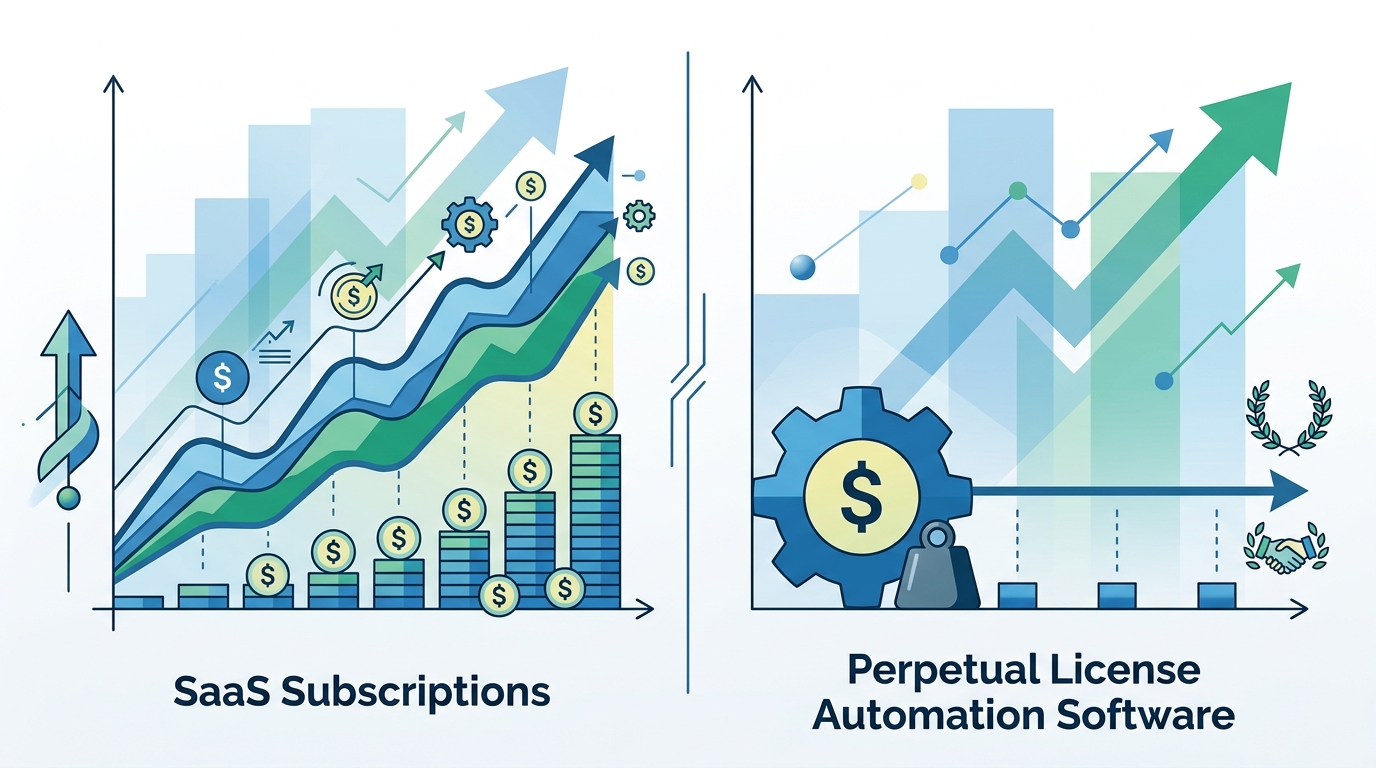
A visual comparison highlighting the financial benefits of perpetual license automation over recurring SaaS subscriptions.
The Problem with SaaS Automation Subscriptions
While SaaS models suit multi-tenant cloud platforms, applying recurring subscription fees to localized administrative utilities creates distinct operational problems:
- Compounding Recurring Costs: Paying monthly fees per execution, per user, or per active worker node means costs scale continuously as your automation maturity grows.
- Unpredictable Pricing Changes: SaaS vendors frequently alter subscription tiers, lock feature updates behind higher pricing plans, or discontinue legacy pricing options without warning.
- Access Expiration Risk: If a monthly payment fails or a subscription is paused during budget realignments, access to vital operational workflows can be instantly cut off, risking operational downtime.
- Budgeting Turbulence: Managing dozens of recurring SaaS subscriptions complicates annual IT budget forecasting and requires constant administrative renewal processing.
For core IT operations tools that run locally on corporate hardware, the SaaS model often serves vendor profits rather than customer needs.
Why Choose Perpetual License Automation Software?
Perpetual licensing offers a straightforward alternative: pay for the software version once, and own the right to use that software indefinitely.
Key benefits of perpetual license software include:
- Capital Expenditure Efficiency: Software purchases can be categorized as long-term capital assets rather than ongoing operational expenses, simplifying accounting.
- Guaranteed Operational Continuity: Your software continues to execute scheduled workflows regardless of internet connectivity, vendor business changes, or subscription status.
- Predictable Cost Ceiling: You pay a fixed, transparent upfront price. Optional software maintenance or update packages can be renewed at your team’s discretion without risking access to your existing software.
- Zero Execution Tax: Run thousands of daily workflows, scripts, and tasks without worrying about tier limits, execution quotas, or extra usage fees.
By choosing perpetual licensing, IT leaders protect their organizations against inflation and unpredictable SaaS pricing shifts.
Calculating the Long-Term Cost Savings for IT Departments
To understand the financial advantage of perpetual licensing, consider a simple cost comparison over a 3-year operating horizon:

An IT department team experiencing the benefits of cost savings from perpetual license automation software, leading to increased productivity and satisfaction.
Typical SaaS Automation Suite (Mid-Tier)
- Year 1: $250/month = $3,000
- Year 2: $250/month (assuming no price increase) = $3,000
- Year 3: $250/month = $3,000
- Total 3-Year Spend: $9,000 (with continuous ongoing fees in Year 4 and beyond).
Perpetual License Automation Software (e.g., Nora Automation)
- Year 1: $499 upfront purchase (includes 1 year of updates)
- Year 2: $0 (or optional $99 maintenance update)
- Year 3: $0 (or optional $99 maintenance update)
- Total 3-Year Spend: $499 – $697 total.
3-Year Savings: Over $8,300+ saved per workstation, representing an immediate reduction in software overhead that can be redirected toward core infrastructure upgrades.
Owning Your Infrastructure and Tools Outright
Software ownership aligns directly with modern data sovereignty and security principles. When you own your software outright:
- 100% Local Execution: Workflows run natively on your local hardware using desktop workflow orchestrators.
- Air-Gapped Security: Software operates perfectly in completely isolated, offline network environments without needing active telemetry connections.
- No Vendor Lock-In: Your scripts remain standard Python, PowerShell, or Bash files, ensuring your automation remains fully portable. (Bash) (PowerShell)
For IT departments committed to implementing simple workflow automation solutions, selecting tools with perpetual pricing provides the ultimate foundation for cost-effective operations.
To see how standardizing on local orchestrators can transform your IT operations, explore Nora Automation today.
Frequently Asked Questions
What does a perpetual license mean in software?
A perpetual license grants you the right to use a specific version of a software application indefinitely after paying a single upfront fee. Unlike SaaS subscriptions, you are never locked out of using your software if you choose not to pay ongoing monthly fees.
Do perpetual licenses include software updates?
Most perpetual licenses include a standard period of minor updates and bug fixes (typically 12 months). After that period, users can choose to continue using their existing version indefinitely or purchase optional maintenance updates at a discounted price.
Can I run perpetual license automation software offline?
Yes. Perpetual license automation software operates entirely locally and does not require persistent cloud authentication, making it ideal for secure, offline, or air-gapped network environments.
Is perpetual licensing suitable for enterprise IT teams?
Yes. Enterprise IT departments frequently prefer perpetual licensing for internal utilities and administration tools because it eliminates unpredictable SaaS billings, simplifies procurement, and aligns with capital expenditure budgeting.