
The Best Prefect and Airflow Alternatives for Local Automation
Modern IT and system administration teams are tasked with maintaining complex cron jobs, batch routines, data processing pipelines, and system maintenance tasks. For years, open-source workflow orchestration engines such as Apache Airflow and Prefect have served as industry standards for managing dependent execution graphs (DAGs). However, as teams strive to streamline operations in 2026, many system administrators and IT managers encounter significant operational friction when deploying these heavyweight platforms.
While cloud-native orchestrators excel at enterprise-scale data engineering across distributed Kubernetes clusters, they often introduce excessive overhead for core IT infrastructure tasks. Teams frequently find themselves spending more time provisioning control planes, configuring database backends, and managing cloud identity permissions than writing the actual scripts that power their business operations.
This guide explores why sysadmins are seeking lightweight, desktop-first options, evaluates top alternatives, and explains how adopting a self-contained orchestrator can restore simplicity to your automation stack.

A visual comparison of a Prefect alternative versus cloud-based workflow orchestration.
Why Teams Are Looking for Airflow and Prefect Alternatives
Apache Airflow and Prefect were architected primarily for data engineering teams operating within cloud environments. They assume dedicated infrastructure resources, persistent network connectivity, and specialized DevOps teams dedicated to managing the orchestrator itself.
For IT operations, sysadmins, and site reliability engineers (SREs), this architecture introduces several distinct challenges:
- Infrastructure Overhead: Setting up Airflow typically requires persistent PostgreSQL databases, Redis message brokers, worker processes, and a web server container. Prefect, while modernized, relies heavily on cloud control planes or self-hosted Prefect Server setups that demand continuous maintenance and monitoring.
- Steep Learning Curve: Writing pipelines in Python using complex DAG syntax, custom operators, and decorators can be overkill when the goal is simply to run a series of PowerShell or Python maintenance scripts in sequence.
- Resource Consumption: Running a full orchestration stack consumes significant background memory and CPU resources, making it impractical to deploy on local workstation environments or isolated edge hardware.
- Cloud Lock-In and Subscription Costs: As orchestration providers push teams toward managed SaaS offerings, recurring subscription fees can escalate rapidly based on task runs, active workers, or API calls.
When the objective is executing operational routines reliably on localized infrastructure, deploying heavy cloud software creates unnecessary complexity.
The Hidden Costs of Cloud-Based Workflow Orchestration
Evaluating an orchestration platform solely on its open-source codebase often masks the true total cost of ownership (TCO). In modern IT environments, the hidden costs of cloud-dependent workflow managers manifest across three main categories:
1. Dedicated Engineering Time
Every component in an orchestration system represents an additional point of failure. Sysadmins frequently spend high-value engineering hours troubleshooting broker disconnections, database migration locks, worker timeout errors, and container dependency mismatches. This maintenance footprint diverts attention from high-priority infrastructure initiatives.
2. Security and Data Boundary Complexity
Cloud-managed orchestrators require local agents to communicate outbound to external APIs or receive webhooks from SaaS control planes. Passing sensitive internal network logs, security telemetry, or administrative credentials through external endpoints creates potential attack vectors and compliance auditing friction.
3. Unpredictable Operational Spending
SaaS orchestration platforms charge based on execution metrics, API calls, or concurrent worker nodes. As your operational script volume grows, monthly invoices scale accordingly. For teams seeking predictably budgeted tools, SaaS-based pricing creates financial variability that is difficult to justify for internal maintenance scripts.
By choosing to avoid cloud infrastructure for ops automation, organizations retain complete sovereignty over their data while eliminating recurring SaaS bills.
Top Prefect Alternatives for Desktop & Local Execution
When evaluating alternatives to Prefect and Airflow for localized desktop execution and internal script management, teams must consider execution flexibility, UI usability, and dependency requirements.
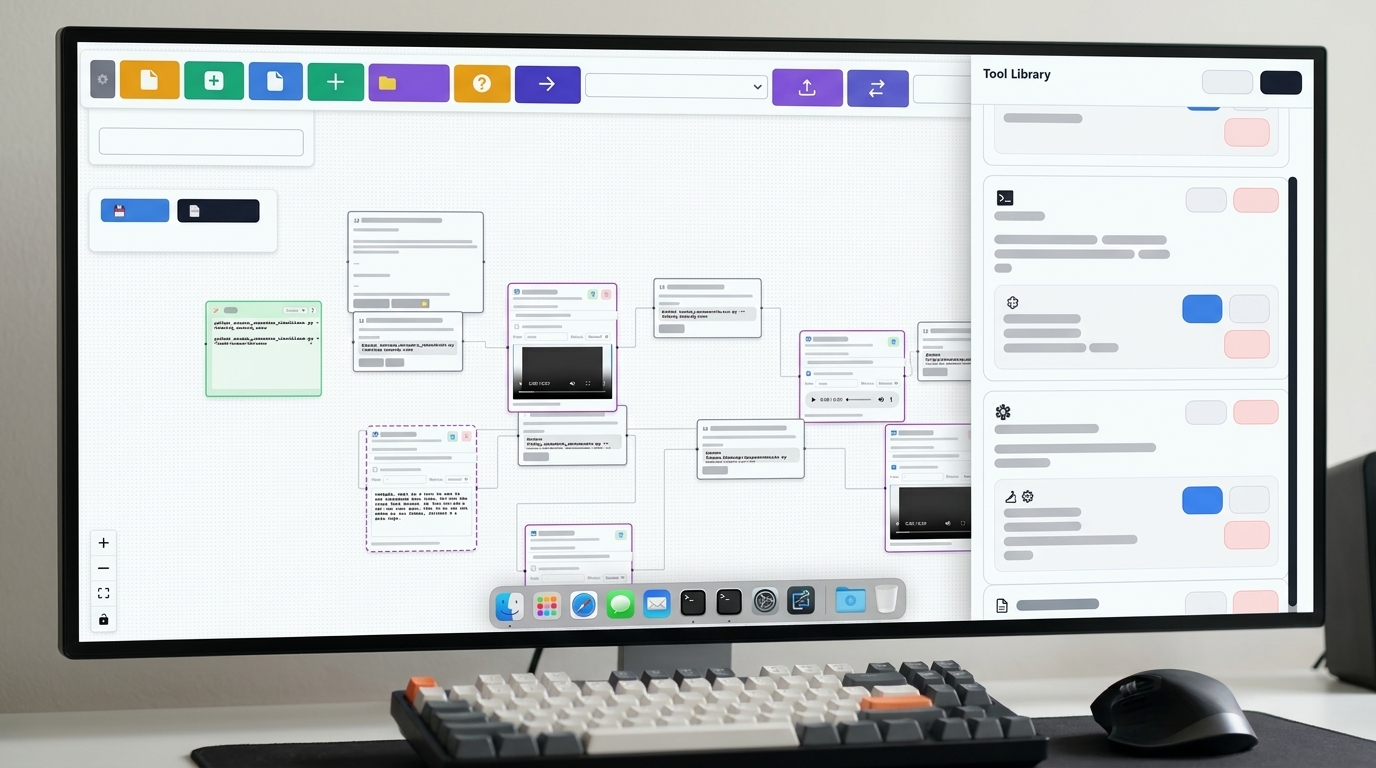
Nora Automation provides a lightweight, desktop-first approach to workflow orchestration.
Nora Automation: A Lightweight Approach
Nora Automation represents a paradigm shift in workflow orchestration by prioritizing local-first execution and desktop accessibility. Designed specifically for sysadmins and IT teams who need to chain together existing scripts without server overhead, Nora offers a zero-cloud alternative to traditional DAG engines.
- Self-Contained Architecture: Operates natively on your workstation or Windows server environment without requiring external database instances, Docker daemons, or internet access.
- Visual Workflow Builder: Connect PowerShell, Python, Bash, and executable files using an intuitive visual drag-and-drop interface, eliminating manual DAG coding.
- Native File System Access: Directly interacts with local operating system paths, network shares, and local system utilities with zero latency.
- Transparent Local Logging: All execution history, stdout, stderr, and failure logs are preserved directly on local storage for straightforward compliance auditing.
Other Self-Contained Orchestrators
Depending on your precise environment, other alternatives to cloud-heavy orchestration tools include:
- System Task Schedulers (Cron / Windows Task Scheduler): Built directly into operating systems, these native tools provide basic time-based triggering. However, they lack dependency mapping, visual error monitoring, and automatic retries across multi-step sequences.
- Local Job Runners (e.g., Runner Scripts & Makefiles): Simple shell scripts or Makefiles can group commands together, but they lack real-time visibility, graphical user interfaces, and structured logging for non-terminal users.
- Lightweight CLI Schedulers: CLI tools like
justortaskfileoffer standardized execution commands across developer machines, though they require command-line fluency and lack visual status monitoring dashboards.
What is a Good Lightweight Alternative to Airflow?
A good lightweight alternative to Airflow must strip away complex distributed infrastructure while retaining core orchestration safeguards: dependency tracking, failure alerting, variable handling, and conditional branching.
For IT operations, an effective Airflow alternative should meet four core criteria:
- Zero-Dependency Setup: Installation should involve a straightforward binary or executable installer rather than multi-container orchestration configs.
- Polyglot Script Execution: The orchestrator should seamlessly execute Python, PowerShell, Batch, and shell scripts in a single workflow without forcing custom wrapper modules.
- Visual Dependency Management: Users should be able to view and manage execution dependencies via a clear graphical user interface without writing boilerplate DAG code.
- Local Data Isolation: Workflow parameters, environmental keys, and output logs must stay entirely within the local domain.
By focusing on these requirements, tools like Nora Automation provide the structure of Airflow without its operational friction.
How to Avoid Cloud Infrastructure for Ops Automation
Transitioning from cloud-dependent workflow engines to local automation tools requires an intentional strategy focused on execution locality and script modularity.
Follow these practical steps to simplify your automation architecture:
- Audit Existing Automation Scripts: Inventory all standalone Python scripts, PowerShell modules, and shell commands running across scheduled tasks or server environments.
- Decouple Logic from Platform Code: Remove platform-specific SDK imports (such as Airflow operators or Prefect decorators) from core script logic, keeping your scripts standard and portable.
- Adopt a Local Workflow Manager: Utilize local automation tools to arrange individual scripts into sequential or parallel visual workflows.
- Implement Standardized Local Logging: Ensure all scripts output standard execution logs to central local log folders for audit visibility.
- Standardize Local Triggering: Replace complex server-based triggers with clean local event listeners or local schedule triggers.
By keeping execution localized, sysadmins regain full control over system resources while completely eliminating cloud orchestrator maintenance.
Frequently Asked Questions
Why shouldn’t sysadmins use Apache Airflow for basic script scheduling?
Apache Airflow is engineered for large-scale data engineering teams operating distributed clusters. For sysadmins, Airflow requires significant infrastructure overhead, persistent databases, and ongoing maintenance that far exceed the requirements of running local maintenance and administration scripts.
Can I run Python and PowerShell scripts together in a local orchestrator?
Yes. Modern local workflow orchestrators allow you to chain Python, PowerShell, and shell scripts into a unified visual execution sequence, passing parameters and execution states between steps seamlessly.
How does a local orchestrator handle security compared to cloud tools?
Local orchestrators execute directly within your internal network and local security boundary. Credentials, API keys, and system logs remain entirely on local storage without crossing third-party cloud networks or external APIs.
Is it possible to migrate away from Prefect without rewriting all my Python code?
Yes. By decoupling your core script logic from Prefect-specific decorators and SDK calls, your Python code becomes standard, portable code that can be executed directly by lightweight local orchestrators like Nora Automation.